

For years, scientists and patients alike have looked toward hair cloning as the ultimate cure for baldness. The promise of regenerating new hair follicles in a lab—without relying on donor area limitations—could change hair restoration forever. But how close are we, really, to making it a reality?
[toggles style=”minimal_shadow” accordion=”true” accordion_starting_functionality=”closed” border_radius=”5px”]
[toggle color=”#032f6e” heading_tag=”h2″ title=”Table of Contents”]
- What Is Hair Cloning?
- Is Hair Cloning Available Yet?
- Hair Cloning vs Hair Transplantation
- What Are the Best Alternatives Today?
- Can Stem Cell Hair Therapy Help?
- When Will Hair Cloning Become Mainstream?
- What You Can Do Now
[/toggle]
[/toggles]
[nectar_global_section id=”24296″]
What Is Hair Cloning?
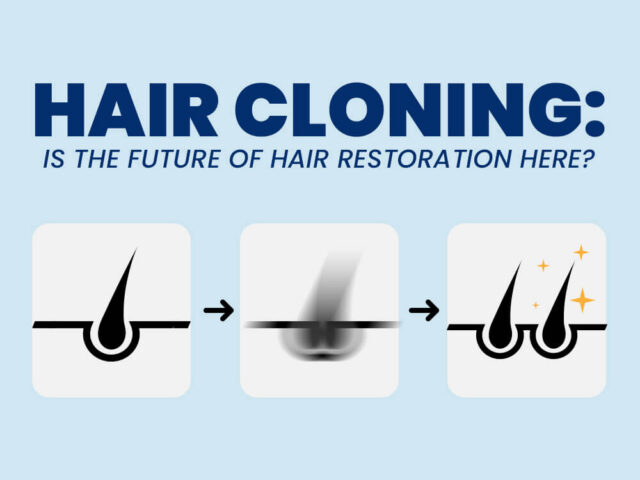
Hair cloning is a regenerative treatment concept where dermal papilla (DP) cells from your existing hair follicles are harvested, multiplied in a lab, and then re-injected into balding areas to stimulate new follicle growth. Theoretically, this could eliminate the biggest limitation of hair transplants: limited donor supply.
Unlike FUE or DHI, which move existing follicles, hair cloning aims to generate new ones.
Is Hair Cloning Available Yet?
Despite exciting research and early clinical trials, hair cloning is not yet commercially available. As of 2026, no clinic in the world—including those in Turkey, the U.S., Japan, or Germany—offers FDA- or EMA-approved hair cloning procedures.
Most hair cloning studies are still in the experimental phase, facing challenges with follicle survival, orientation, and consistent regrowth.
Hair Cloning vs Hair Transplantation
Hair transplants like FUE and DHI are currently the gold standard in restoring lost hair because they use real, living follicles and offer natural-looking, permanent results.
| Feature | Hair Transplant (FUE/DHI) | Hair Cloning |
|---|---|---|
| Availability | Widely available | Not yet available |
| Method | Moves existing follicles | Creates new follicles from stem cells |
| Results | Proven, predictable | Still in clinical research |
| Cost | $2,800–$4,500 (in Turkey) | Unknown (likely high) |
What Are the Best Alternatives Today?
If you’re looking for results today, FUE and DHI hair transplants remain the safest, most effective treatments. They offer:
- Permanent, natural-looking results
- Minimally invasive procedures
- Short recovery time (7–10 days)
Techniques like Sapphire FUE and painless anesthesia make these procedures even more comfortable.
Can Stem Cell Hair Therapy Help?
Stem Cell Hair Therapy is another exciting option available now. It’s not cloning—but it does use regenerative growth factors to strengthen thinning hair and potentially reactivate dormant follicles.
While not a cure for baldness, it’s a powerful option for early-stage hair loss or post-transplant support.
[nectar_global_section id=”24323″]
When Will Hair Cloning Become Mainstream?
Experts suggest that hair cloning may become a viable option within the next 5–10 years—but several barriers remain, including safety, efficacy, regulation, and cost.
Ongoing research from Japan, the UK, and U.S.-based biotech firms is promising—but at this time, no clinical application is ready for the public.
What You Can Do Now
If you’re experiencing hair loss today, there’s no need to wait on future breakthroughs. Proven procedures like FUE, DHI, and stem cell therapy already offer impressive, lasting results.
Start your hair restoration journey with a free consultation.
[nectar_global_section id=”22979″]
[toggles] [toggle title=”Sources” color=”Accent-Color” id=”b1″ heading_tag=”h6″]
- Therapeutic Strategy for Hair Regeneration – NCBI https://pmc.ncbi.nlm.nih.gov/articles/PMC3706200/
- Progression of Surgical Hair Restoration Techniques – PubMed https://pubmed.ncbi.nlm.nih.gov/25775658/
- Follicular Cell Implantation: An Update on “Hair Follicle Cloning” – PubMed https://pubmed.ncbi.nlm.nih.gov/15135131/
[/toggle] [/toggles]