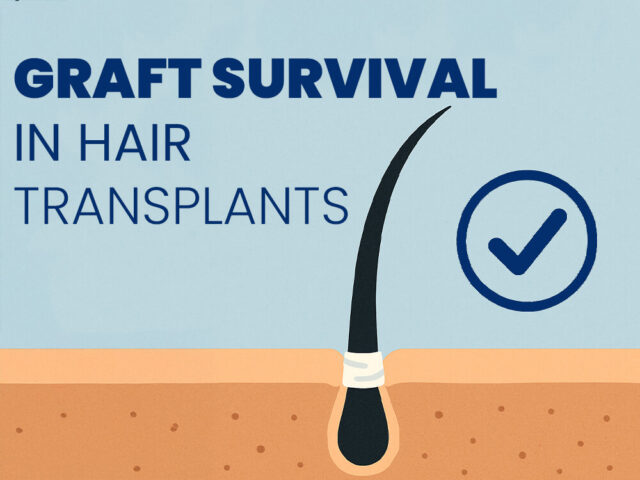

The success of a hair transplant largely depends on graft survival rate—the percentage of transplanted hair follicles that successfully take root and grow. While modern techniques like FUE (Follicular Unit Extraction) and DHI (Direct Hair Implantation) have improved graft survival, several factors influence the outcome, including the surgeon’s expertise, post-operative care, and the patient’s health.
In this guide, we’ll explore FUE vs. FUT graft survival rates, DHI advantages, and best practices to maximize your hair transplant success. We’ll also showcase real patient results at different graft numbers.
[toggles style=”minimal_shadow” accordion=”true” accordion_starting_functionality=”closed” border_radius=”5px”] [toggle color=”#032f6e” heading_tag=”h3″ title=”Table of Contents”]
- What is Graft Survival Rate in Hair Transplants?
- FUE vs. FUT Graft Survival Rate
- DHI Graft Survival Rate: Why It’s Higher
- Key Factors Affecting Graft Survival
- How to Maximize Your Graft Survival Rate
[/toggle] [/toggles]
What is Graft Survival Rate in Hair Transplants?
The graft survival rate refers to the percentage of transplanted hair follicles that successfully grow new hair.
Typical survival rates for modern hair transplants:
- FUE (Follicular Unit Extraction): 85-95% survival rate
- DHI (Direct Hair Implantation): 90-97% survival rate
- FUT (Follicular Unit Transplantation): 85-95% survival rate
- Older methods (e.g., punch grafting): 50-70% survival rate
[nectar_global_section id=”24296″]
FUE vs. FUT Graft Survival Rate
When comparing FUT vs. FUE vs. DHI graft survival, both methods yield similar survival rates, but there are key differences:
| Method | Graft Survival Rate | Key Differences |
|---|---|---|
| FUT (Strip Method) | 85-95% | Higher density but leaves a linear scar |
| FUE (Follicular Unit Extraction) | 85-95% | No linear scar, individual extraction reduces trauma |
| DHI (Direct Hair Implantation) | 90-97% | Direct implantation improves survival and healing |
Compare FUE & DHI Techniques: FUE vs. DHI Hair Transplant
DHI Graft Survival Rate: Why It’s Higher
The DHI method is known for its higher graft survival rate (90-97%) due to:
- Immediate Implantation: Grafts don’t stay outside the body for long, reducing dehydration.
- Choi Pen Technology: Ensures precise depth, angle, and placement.
- Less Trauma to Grafts: No need to create recipient site incisions separately.
Learn more about DHI: DHI Hair Transplant
Key Factors Affecting Graft Survival
1. Donor Area Quality
- A healthy donor area ensures strong follicles that survive transplantation.
- Overharvesting can reduce future transplant options.
Donor Area Guide: Hair Transplant Donor Area
2. Extraction & Handling of Grafts
- FUE minimizes scarring but requires careful extraction to avoid trauma.
- DHI reduces handling time, increasing survival rates.
[nectar_global_section id=”24323″]
3. Post-Transplant Care
Following post-op instructions is critical for graft survival:
- Avoid touching, scratching, or rubbing the transplanted area.
- Follow the recommended washing procedure.
- Avoid smoking, alcohol, and excessive sweating in the first few weeks.
Post-Op Care & Products: After Hair Transplant Products
How to Maximize Your Graft Survival Rate
- Choose a skilled, experienced surgeon.
- Follow post-operative care instructions.
- Consider additional treatments like PRP or Stem Cell Therapy.
Ensuring the Best Hair Transplant Results
Graft survival rates vary based on technique, surgeon skill, and patient care. DHI offers the highest survival rate, but FUE and FUT remain excellent choices when performed correctly.
At Estenove, we ensure high graft survival rates and natural results. If you’re considering a hair transplant, fill the form below to get free consultation
[nectar_global_section id=”22979″]
[toggles] [toggle title=”Sources” color=”Accent-Color” id=”b1″ heading_tag=”h6″]
- Review of Factors Affecting the Growth and Survival of Follicular Grafts – NCBI https://pmc.ncbi.nlm.nih.gov/articles/PMC2956960/
- Evaluation of Survival Rate After Follicular Unit Transplantation Using the KNU Implanter – PubMed https://pubmed.ncbi.nlm.nih.gov/11493294/
- Clinical Experience on Follicular Unit Extraction Megasession for Severe Androgenetic Alopecia – PubMed https://pubmed.ncbi.nlm.nih.gov/31529675/
[/toggle] [/toggles]